On this page
A driveway takes more abuse than any other slab at a home. Cars turn on it, rain washes across it, the sun bakes it, and tree roots push up from below. In Fort Lauderdale, most driveways show their age in the same few ways: long cracks, a sunken corner by the street, a rough gray surface, or one section that rocks when you drive over it. Concrete driveway repair deals with each of those without starting over.
Concrete driveway repair for Fort Lauderdale homes
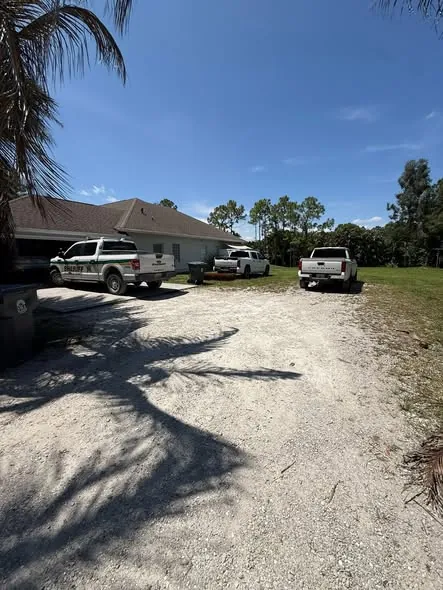
Many driveways here were poured decades ago on sandy fill. Sand drains well, but it also shifts. When rainwater from a roof or a downspout runs along the edge of a slab day after day, it carries some of that sand away. The concrete loses its support and cracks or sinks. A good repair fixes the concrete and also deals with the water or the roots that caused the trouble.
We look at the whole driveway first. Then we recommend the smallest repair that will hold up, and we put it in writing.
What causes driveway cracks in South Florida?
Driveway cracks here usually come from one of these:
- Sandy soil that settles or washes out under the slab
- Roots from ficus, banyan, oak and palm trees lifting one side
- Heavy vehicles such as delivery trucks, boats on trailers and dumpsters
- Water from downspouts and sprinklers running along the edges
- Concrete that was poured too thin or without enough control joints
- Normal shrinkage as the slab cured years ago
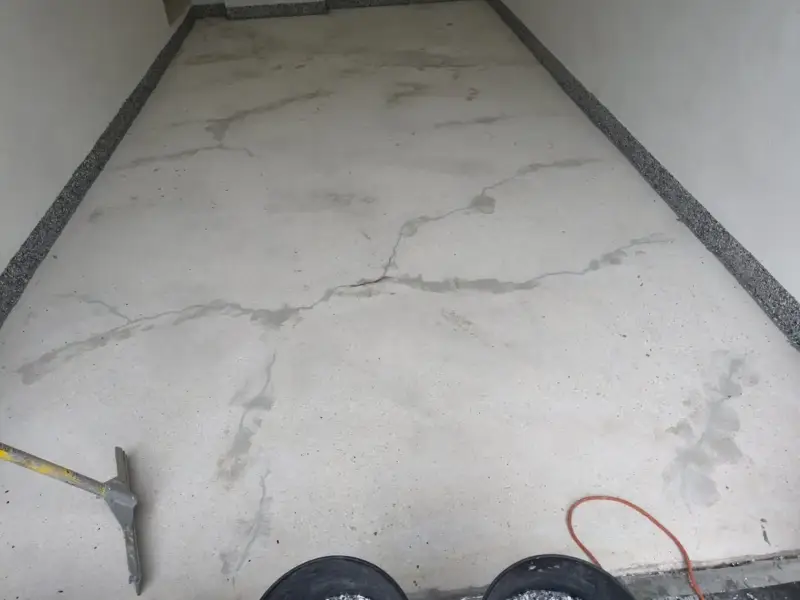
Thin, tight cracks that have not changed in years are mostly a looks problem. Cracks that are wide, growing, or higher on one side point to movement under the slab.
How do you repair a concrete driveway?
The repair depends on what failed. These are the common ones:
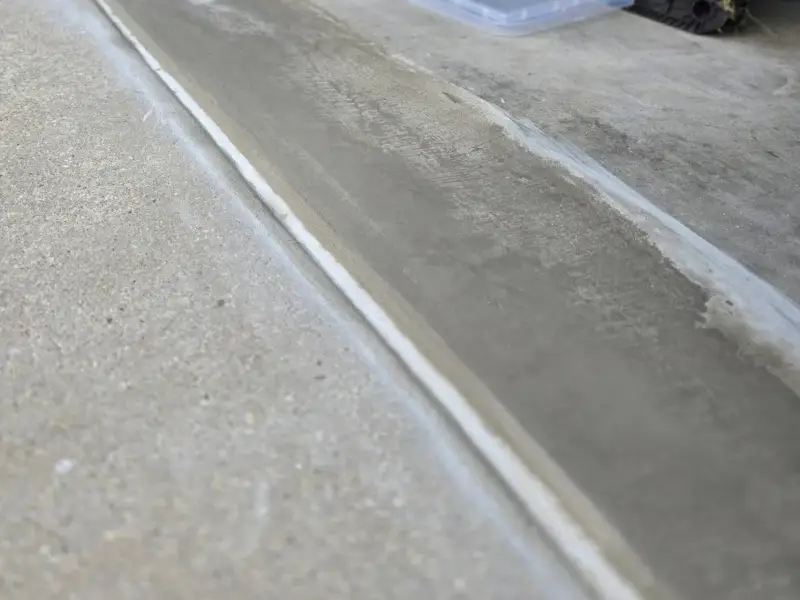
- Crack repair. We open the crack slightly, clean it out and fill it with a flexible repair material so water stays out.
- Patching. Broken corners, chipped edges and shallow holes are cut back to solid concrete and rebuilt with a repair mortar.
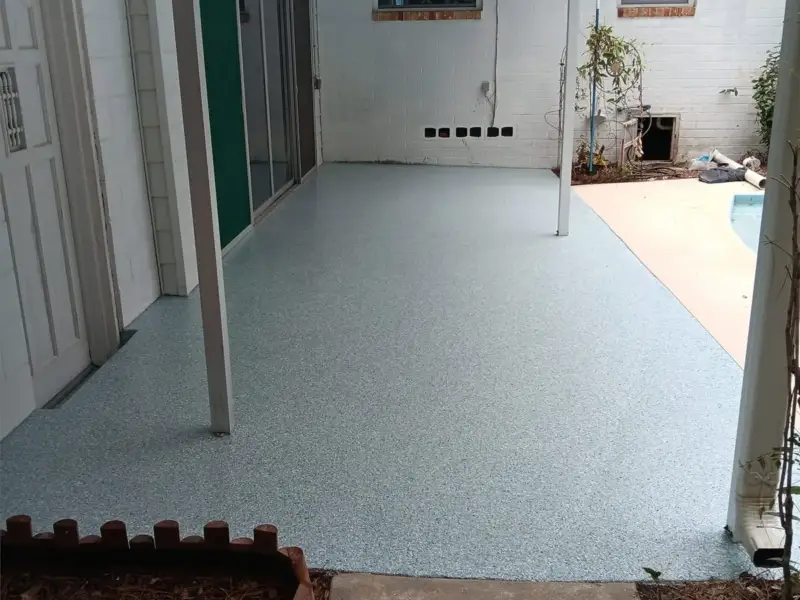
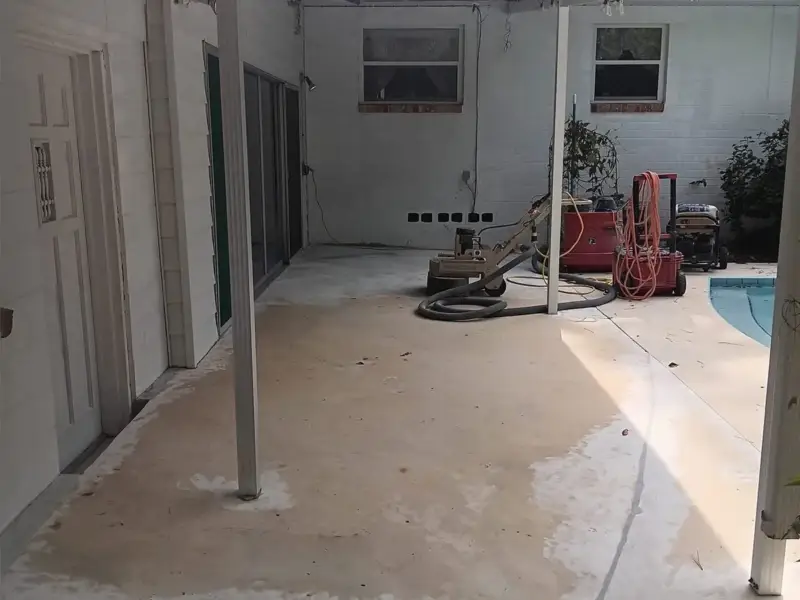
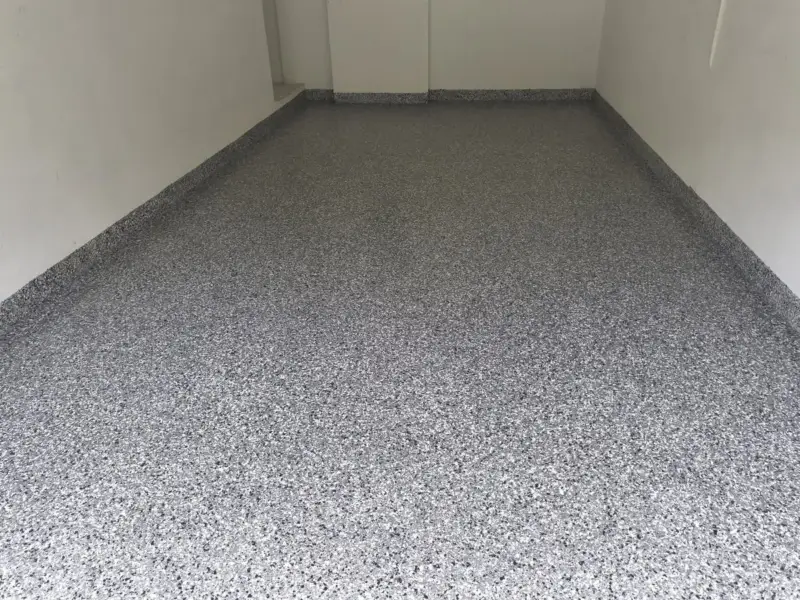
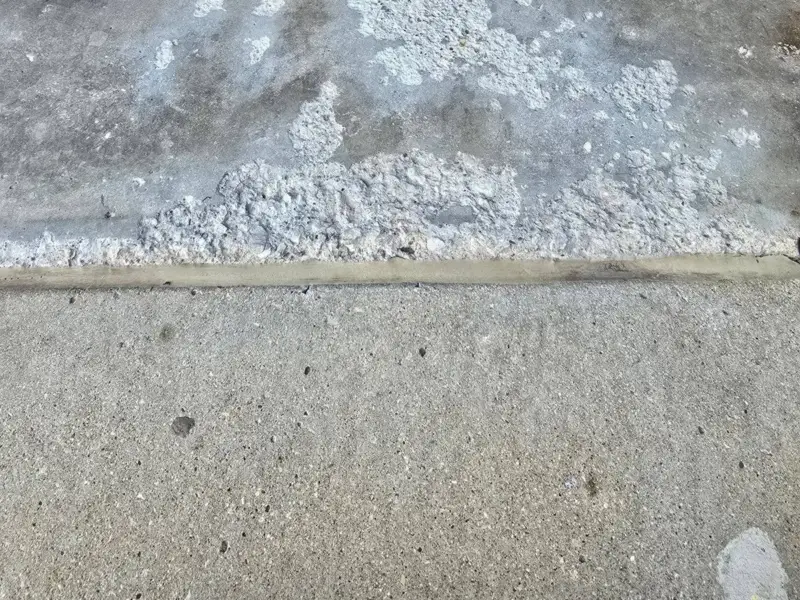
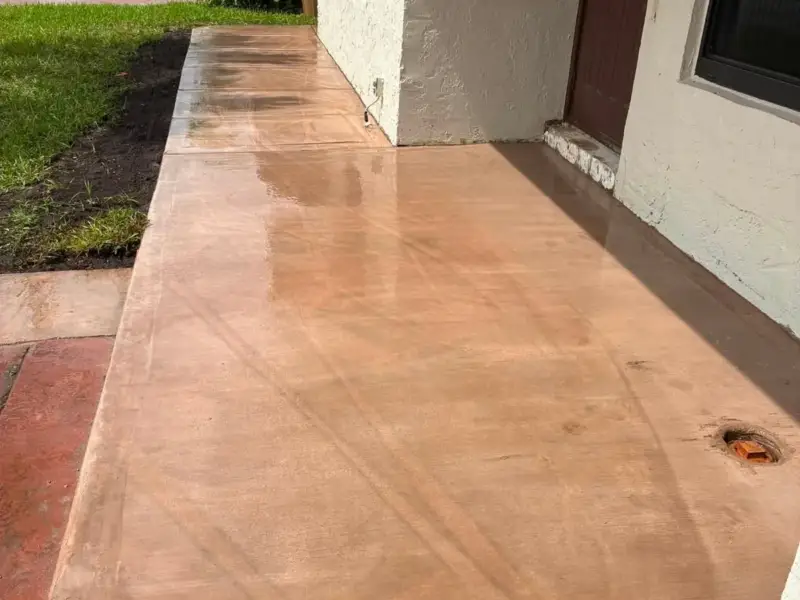
- Resurfacing. When the surface is worn but the slab is sound, we repair the cracks and cover the whole driveway with a thin new layer.
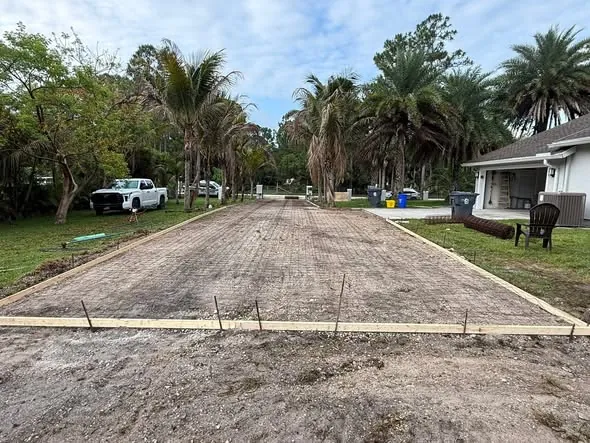
- Section replacement. A sunken or shattered section is saw cut along clean lines, removed, and re-poured on a compacted base.
Can a driveway be resurfaced instead of replaced?
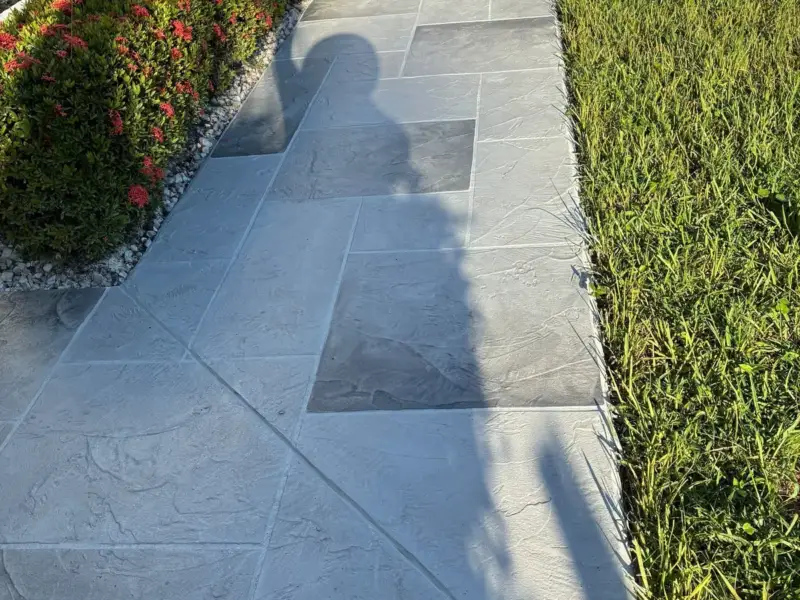
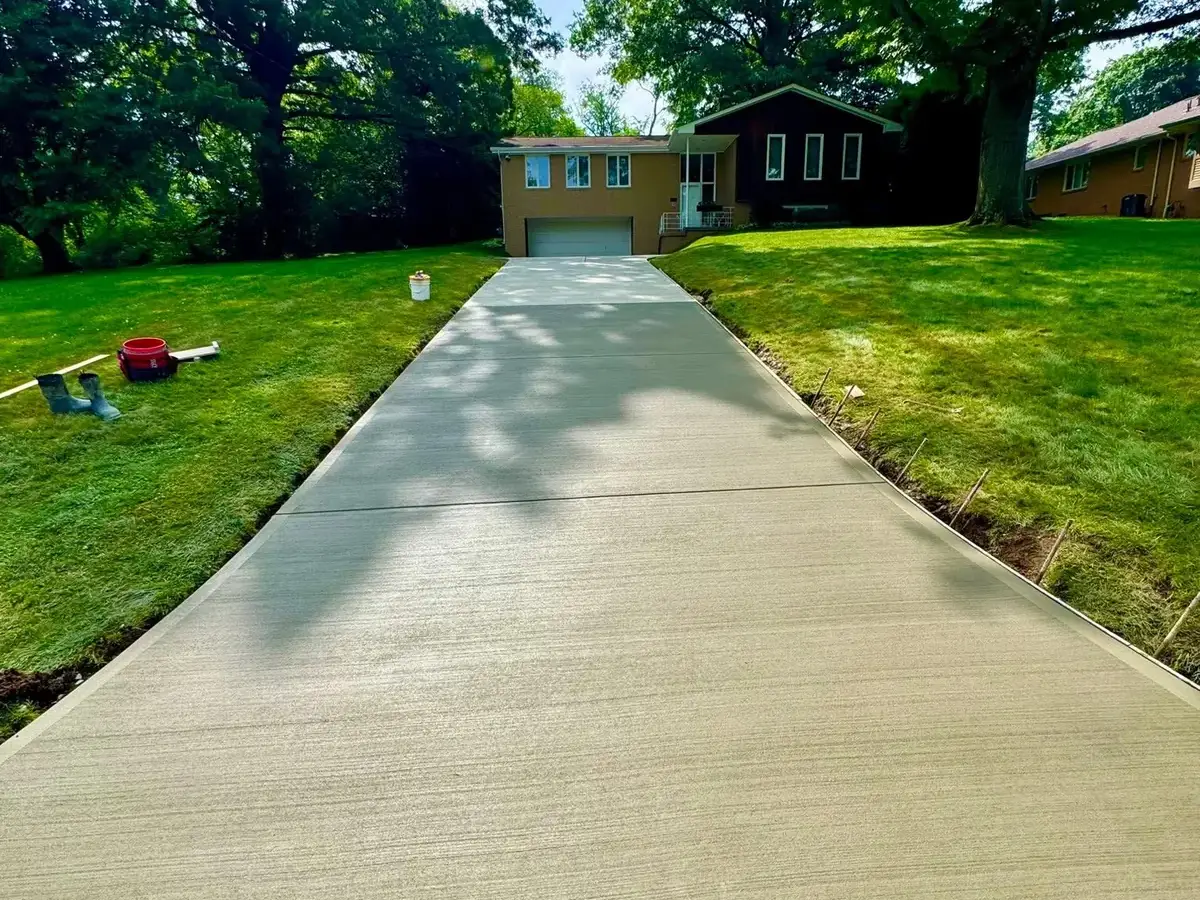
Yes, when the slab underneath is solid. Driveway resurfacing puts a thin new layer that sticks to the old concrete, so you get one even color and a fresh texture for much less than a new driveway. It will not fix a slab that is sinking, rocking or broken into pieces. In that case the bad sections need to come out first.
A quick test: if the cracks are tight and both sides sit at the same height, resurfacing is usually an option. If one side is higher or the slab moves under a car, it is not.
When does a driveway need to be replaced?
Replacement makes sense when repair would cost almost as much and not last. Signs include many wide cracks across most of the surface, sections that have dropped an inch or more, concrete that crumbles when you scrape it, and large roots under the slab. Often only part of the driveway is that bad. Replacing two or three sections and resurfacing the rest can give you a driveway that looks all new.
Driveway repair near the coast and the canals
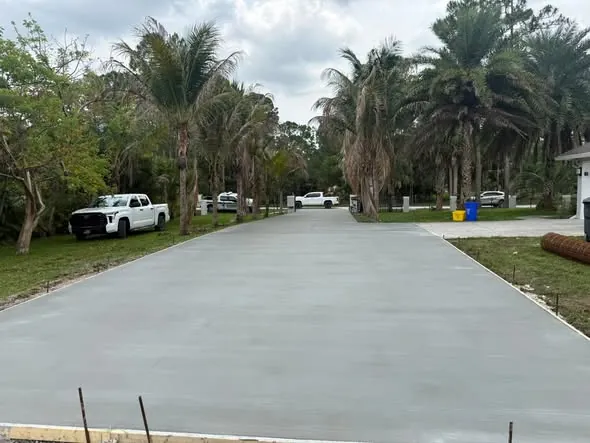
Homes east of Federal Highway and along the canals deal with salt in the air and a high water table. Salt speeds up surface wear and rusts any steel that is close to the surface. Low driveways in neighborhoods like Las Olas Isles and Rio Vista can sit in standing water during the fall king tides. On these homes we pay extra attention to drainage, to sealing the finished surface, and to keeping reinforcing steel deep enough in new sections.
Do I need a permit to fix my driveway?
Small repairs usually do not. Bigger jobs can, especially when the work reaches the apron, the swale or the sidewalk where your driveway meets the street. Rules also differ between Fort Lauderdale and the towns next door. We check what your job needs and tell you before any work starts.
How long before I can use my driveway again?
Crack and patch repairs are usually ready for foot traffic the next day. A resurfaced driveway normally needs a few days before cars go back on it. Newly poured sections need about a week before you park on them, and longer for heavy vehicles. Summer rain can shift the schedule, so we watch the forecast and plan pours around the afternoon storms.
What happens on the day of the work?
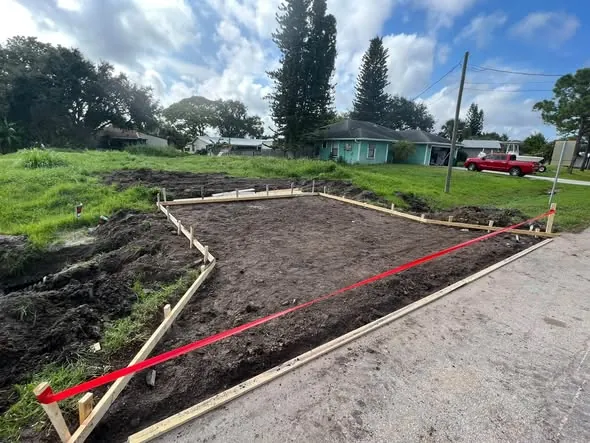
We start by protecting what is around the driveway: garage door, walls, plants and sprinkler heads. For crack and patch work, the noisy part is grinding, and it is usually over by midday. For section replacement, the old concrete is saw cut, broken out and hauled away first. Then the base is graded and compacted, forms and reinforcement go in, and the concrete is poured and finished the same day when the weather allows. We block off the area with tape before we leave and tell you exactly when it is safe to walk and drive on it.
How do I keep a repaired driveway in good shape?
A few habits make a big difference. Point downspouts away from the slab so roof water does not run along its edge. Adjust sprinklers that hit the concrete every morning, since well water leaves rust stains. Keep heavy trucks and dumpsters off the driveway when you can, or ask for plywood under the wheels. And have the surface sealed, then resealed when water stops beading on it.
What does driveway repair cost?
The price depends on how much concrete is involved, how deep the damage goes, how easy the driveway is to reach, and whether any of it has to be removed and hauled away. Our concrete repair cost guide explains what moves the price up or down. Every estimate we give is free, written and itemized.
If the surface is in good shape and you only want to protect it, concrete sealing is the lower cost step. If you have one long crack and nothing else, concrete crack repair may be all you need.