On this page
A bare garage floor in South Florida does not stay nice for long. It soaks up oil, sheds dust, grows dark tire marks and sweats when humid air hits the cool slab. A garage floor coating turns that slab into a sealed, bright surface that wipes clean. Done right, it also covers old cracks and patches for good.
Garage floor coating for Fort Lauderdale garages
Most garages we see fall into two groups. Older block homes have slabs with decades of stains, pitting near the door and a few long cracks. Newer homes and townhomes have clean slabs that the owner wants to protect before the stains start. Both can be coated. The older slab just needs more repair first.
What is the best coating for a garage floor?
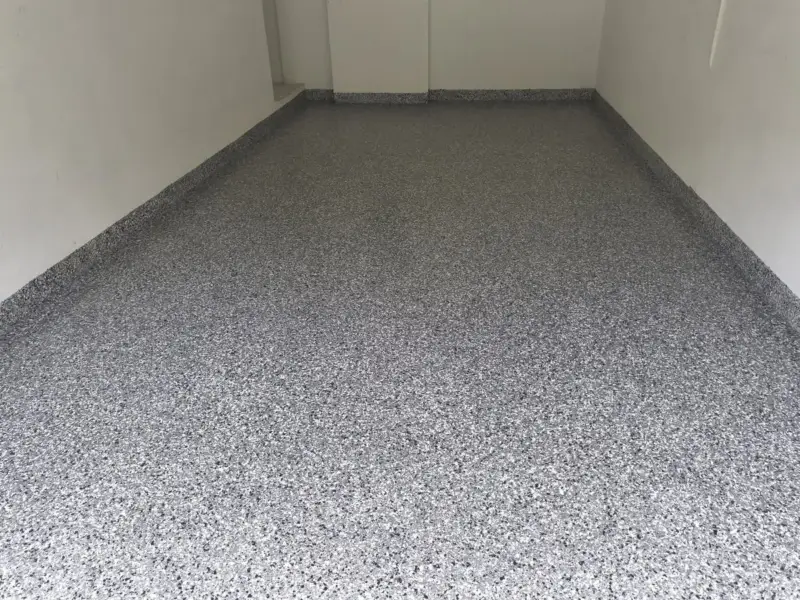
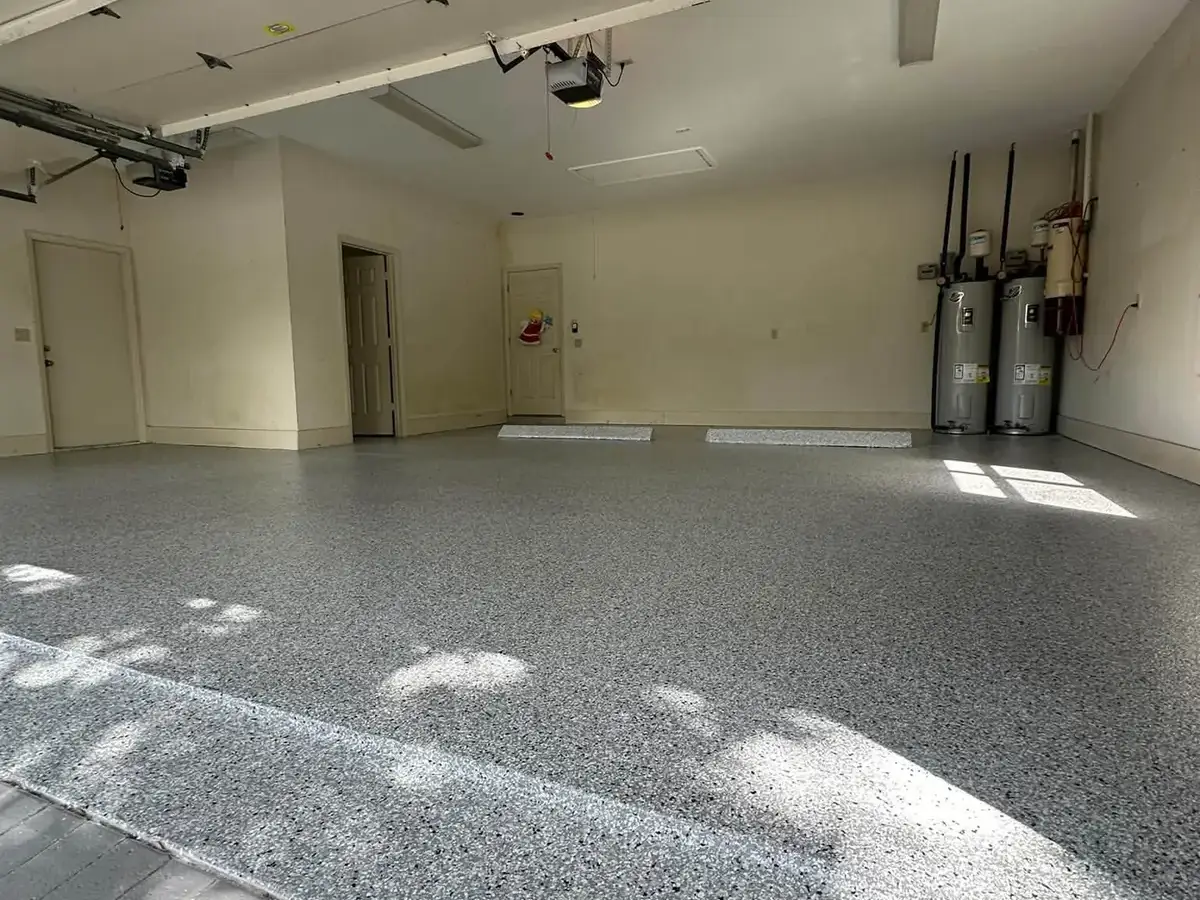
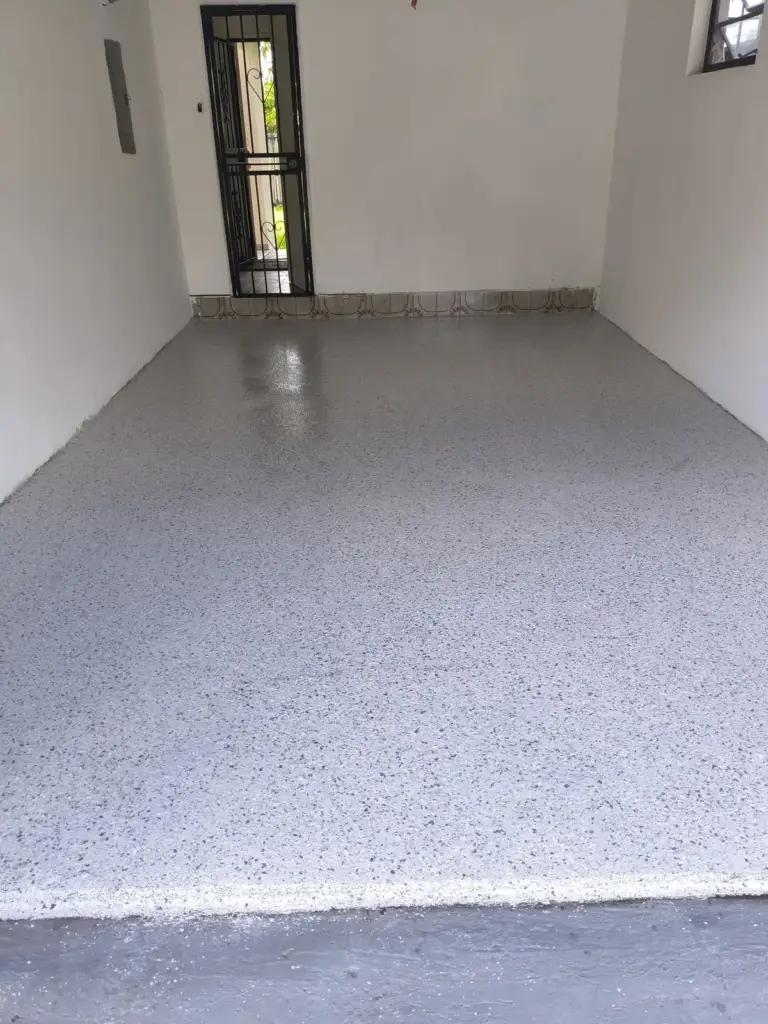
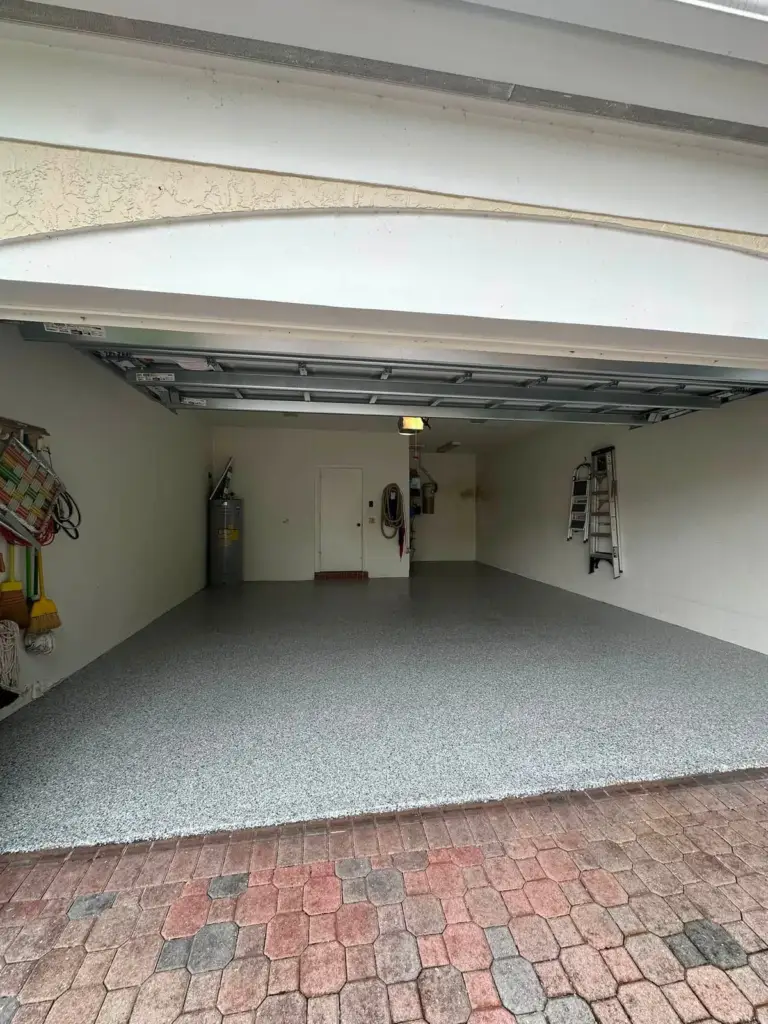
For most home garages, a flake system is the best fit. It has a colored base coat, vinyl flakes scattered into it while it is wet, and one or two clear top coats. The flakes add texture so the floor is less slippery, and they hide dust and small flaws. The clear top coat is what takes the wear.
The base can be epoxy or polyaspartic. In a Fort Lauderdale garage that gets afternoon sun through an open door, a polyaspartic top coat is worth it because it does not yellow. Metallic epoxy floors are a different look, with swirls of color and a glassy finish, and they suit showrooms, game rooms and enclosed garages.
How is a garage floor prepared for coating?
Prep is most of the job. A coating can only be as strong as its grip on the concrete.
- We empty the floor area and check the slab for moisture, old sealers and oil.
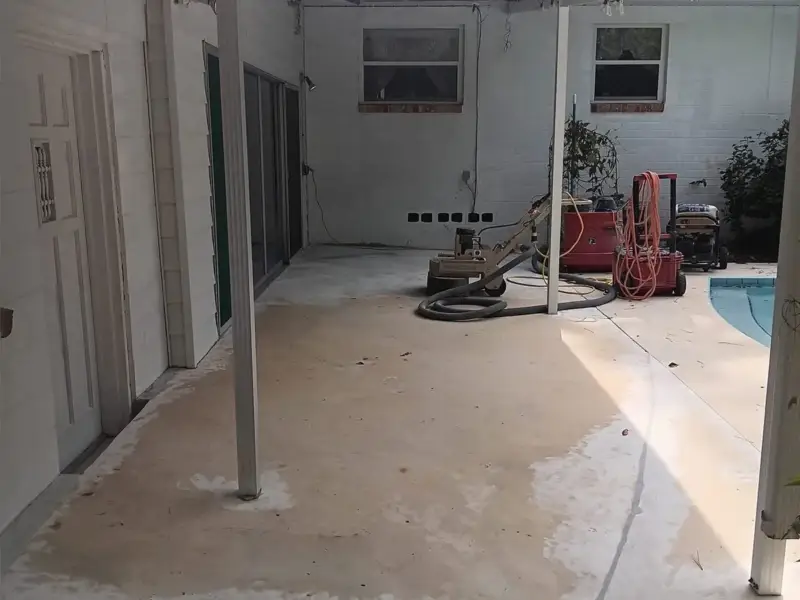
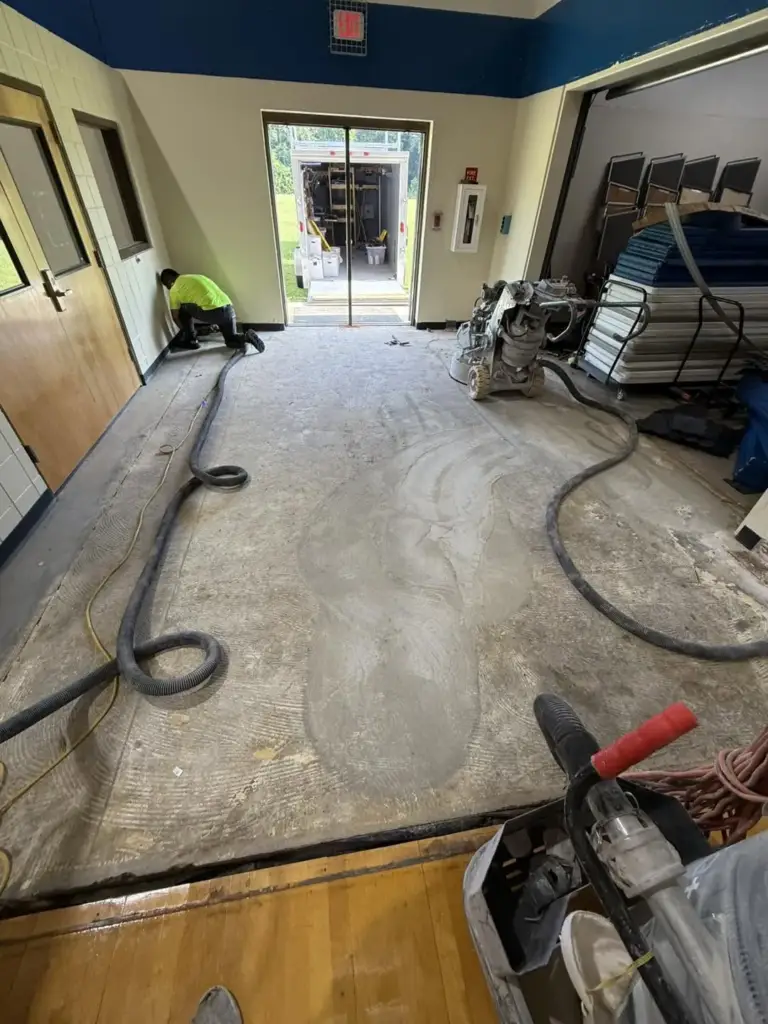
- We grind the surface with diamond tooling. This opens the pores of the concrete so the coating can soak in and lock on.
- We repair cracks, pits and spalled spots and grind the repairs flush.
- We vacuum the floor until it is dust free.
- We apply the base coat, broadcast the flakes, scrape off the loose ones and seal everything with a clear top coat.
Why do garage floor coatings peel?
Peeling is almost always a prep or moisture problem. Paint and store kits fail because they sit on top of a smooth or dirty slab. Hot tires then soften the film and pull it off. Moisture rising through the slab can also push a coating loose. Grinding the concrete, testing for moisture and using professional grade materials are what prevent it.
Does humidity affect a garage floor coating?
Yes. South Florida air holds a lot of moisture, and so does the ground under the slab. Some resins turn cloudy or cure poorly if they are applied in very damp conditions. We check the slab and the weather, pick materials that suit the conditions, and time the work so each coat cures properly.
Can you coat a cracked or pitted garage floor?
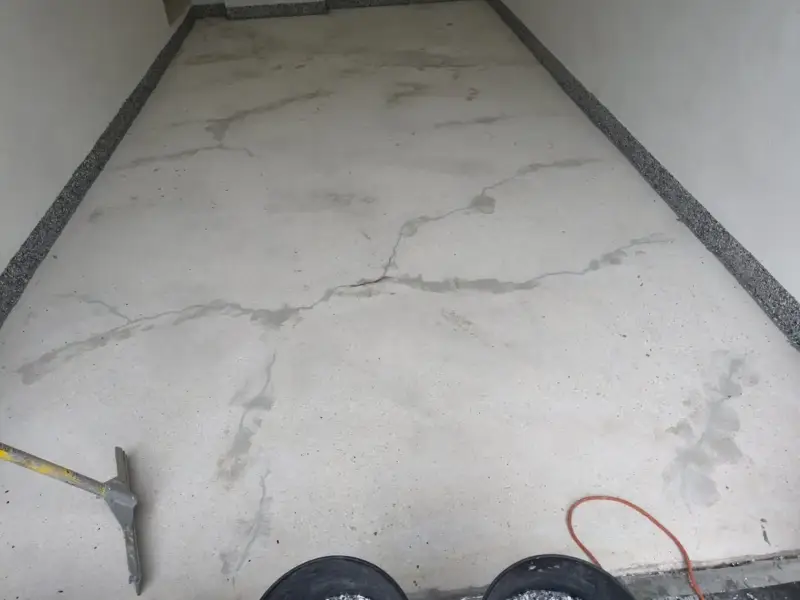
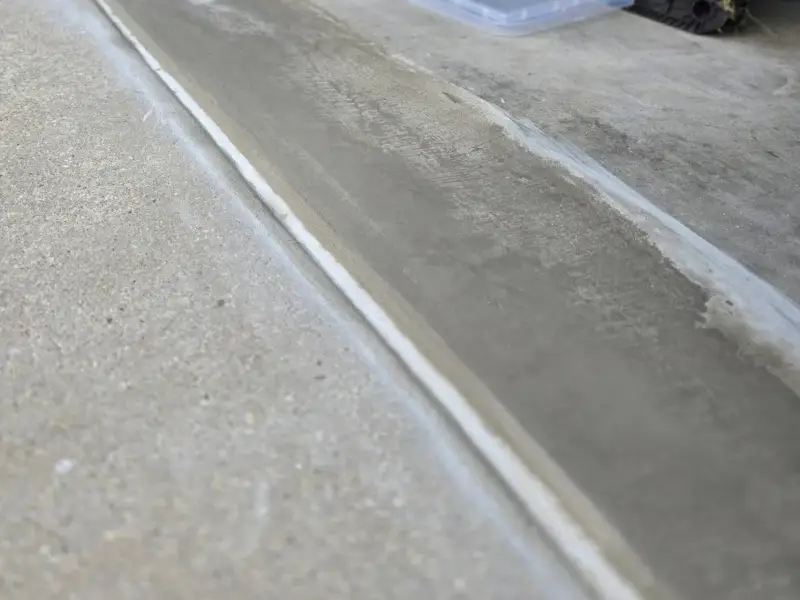
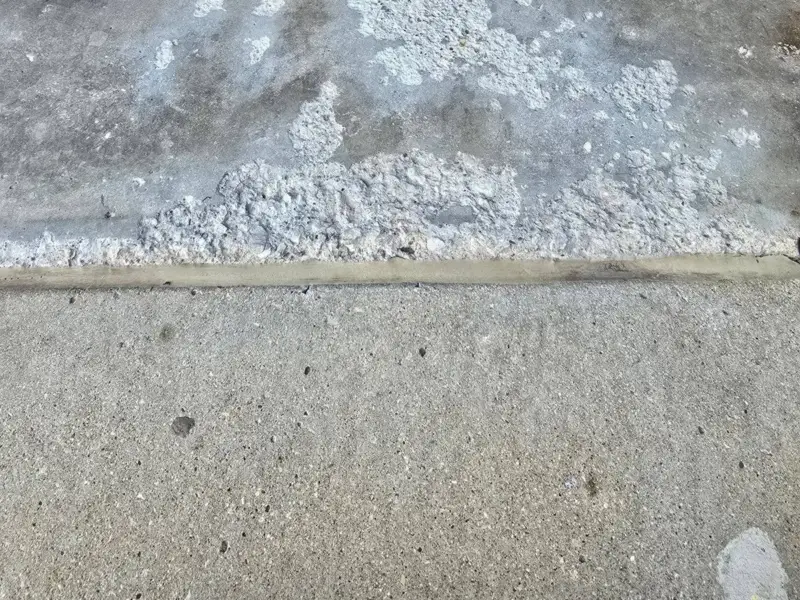
Yes, and it is one of the best reasons to coat one. We fill cracks and rebuild pitted areas before the base coat goes down. Stable cracks disappear under the flakes. If a crack is still moving, we tell you, because a moving crack can show through any coating in time. Damage along the garage door threshold is common here and may need spalling repair before the floor is coated.
How long before I can park on it?
It depends on the system. Polyaspartic floors are often ready for foot traffic the same day and for cars within a day or two. Epoxy systems need longer, usually several days before cars. We give you the exact times for your floor when we finish.
Beyond the garage
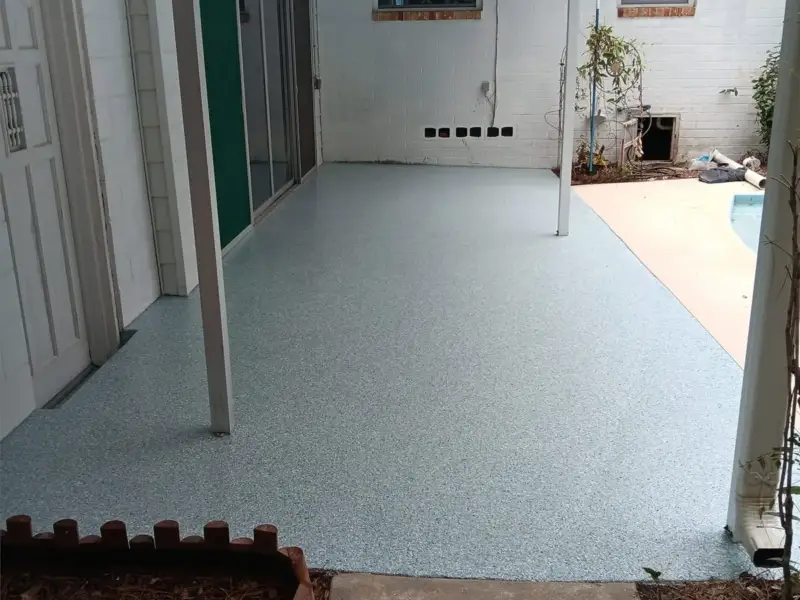
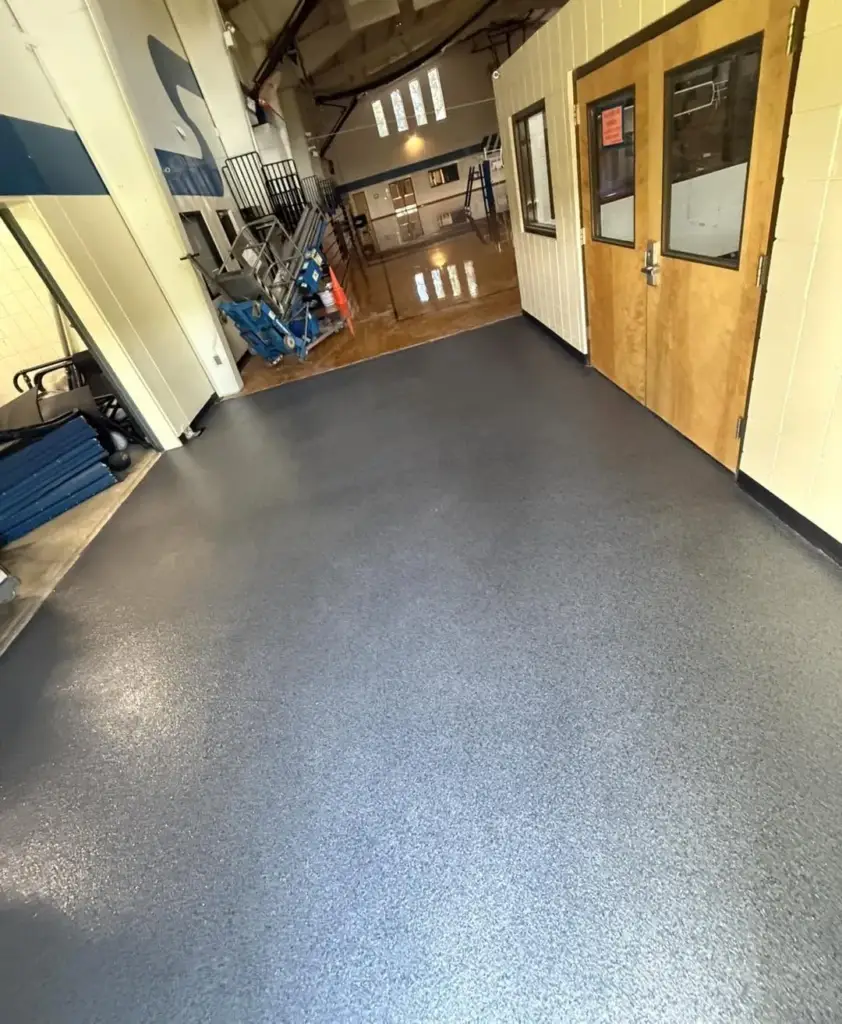
The same systems work on carports, workshops, lanais, laundry rooms and commercial floors. Outdoor areas need a UV stable top coat and more texture for wet feet.
Is my garage floor a good candidate for a coating?
Most are. The slab needs to be structurally sound and free of water coming up from below. Stains, old paint, pits and stable cracks are all things we deal with in prep. The floors that need more thought are ones with a white powder that keeps coming back, which is a sign of moisture moving through the slab, and ones with cracks that are still opening. We test for moisture and tell you what we find before you commit.
What about metallic epoxy floors?
A metallic floor uses epoxy with fine metallic pigments that are moved around while the resin is wet. The result is a deep, swirling pattern that looks a little like stone or water, with a high gloss. No two floors come out the same. It is a showpiece finish, and it suits enclosed garages, home gyms, game rooms and showrooms. It shows dust and scratches more than a flake floor, and because it is epoxy, it is best kept out of direct sun or finished with a UV stable clear coat.
How do I care for a coated floor?
Very simply. Sweep or dust mop it when it needs it. Mop with warm water and a mild cleaner. Wipe up oil, brake fluid and battery acid when they spill. Put pads under jack stands and kickstands. Avoid dragging sharp steel across it. That is about all it takes to keep a coated floor looking good for years.
What does a garage floor coating cost?
Price depends on the size of the floor, how much repair the slab needs, the system you choose and how many coats go down. See our concrete repair cost guide for the full list of price factors. We measure the floor and give you a free written estimate.
If you would rather keep the natural gray look, concrete sealing protects the slab without changing its color much.